Wednesday, January 31, 2018

Ritchie -Martinez, Beatriz

This week's reading Invisible No More by Andrea J. Ritchie emphasized several topics about black and latino violence. Throughout the reading there was a repetition of how minorities suffered of violence because of their physical appearance. Police brutality against black and latino communities was one of Ritchie’s claims that caught my attention the most.

Her claim or emphasis on police brutality led me to think about the cities and neighborhoods with concentration of minorities. These places are targeted the most because of the people that live in them. Black and Latino people are portrayed as violent when they are not. “The police are not here to protect me. They are just… as anyone else to commit violence against me” (Ritchie,). I picked this quote from the book because it illustrates how black and latino people feel towards the law. The law is supposed to protect the people and make them feel safe. Ritchie yet shows how it is not that way.

Moreover, Ritchie explains how her writing can help change the stereotyping of black and latino people and end police brutality. “Invisible No More seeks to undo this erasure; deepen, broaden, and provide context to the discussion of Black women’s experiences of policing and criminalization” (Ritchie 11,). As I mentioned before, Ritchie kept repeating words like policing and abuse which is why police brutality was the main takeaway I had. This quote is just another example of how Ritchie was really trying to tell her audience the impact of police brutality. I was really able to grasp onto this idea and understand how it affects Black and Latino communities.

A movement that has recently fought against police brutality is the Black Lives Matter. A lot of people similar to Richie have gone out to the streets to emphasize this problematic situation for all minorities. It is about time the world fights and protects all its people. Black and Latinos should not be criminalized for the way they look or for the stereotypes created by others. They are being targeted for no reason. The Black Lives Matter movement has made an impact on society by making everyone aware of what is going on. Also, this movement helps people understand what it is like to be a minority.

With that being said, what are some other ways we can stop police brutality without creating more tension between the black and white races?

Foreword

            Ritchie’s Foreword is in my opinion a strong text because she is giving us real life stories of these injustices that happened. This is why I totally agree and want to talk about her point that she made where she stated, “we need more efforts grounded in our communities to document police violence against women and girls of color.”

            I think that the main reason why it is important to focus on communities itself first is because they are smaller groups to start with spreading the word. What I mean by this is, like Ritchie explained, when a young women got assaulted by the officer the incident was able to spread quicker in her community leading it to become a full report in a zine and allowing it to be spread further of her injustice. When you start small it will eventually become bigger and a community is the start way to allowing these real incidents to be recorded and known. Ritchie does explain how collecting these stories and sharing them has become a critical form of resistance led by marginalized women of color and that is something that needed to be done because police violence is something everyone should know about.

            It’s interesting how she mentions Chicago’s police because I know for a fact that we have one of the most corrupt and violent police in the country. We hear about it all the time in the news and yet I still haven’t seen these police officers being locked like they should be for their aggressive and violent way that they handle situations. However, even though I know how violent Chicago policemen are, I was shocked by the fact that in 1972-1991 there were at least 120 Black people who were tortured. Which is why I say again that its important to start with communities in spreading the word and taking action to defend their own and come together to end these cases that are not closed because the offenders are walking freely.

            Ritchie’s article is containing mainly information from the 70s, 80s, 90’s, etc. But its horrifying that to this day there are similar, if not worse, situations happening to young Black women. There was an incident that actually happened in June 2015 where a 20-year-old Black woman named Charnesia Corley was raped but the police of Texas defined it as “inspecting inside her vagina for drugs”. They charged and arrested her for finding 0.02 ounces of marijuana. They did drop the charges and yet they did nothing to the cops apparently and it wasn’t until months after her case that they passed a new bill where policemen can’t search for anything inside a person’s body without a search warrant. Injustice still goes on to this day.


Police are meant to keep people safe and make our communities better but really they bring disruption and injustice because power gets to their heads and so far no one stops them.

Invisible No More

This was a banner for the #SayHerName vigil in NY
In Invisible No More, Andrea Ritchie brings forward the invisible stories of women of color’s interactions with the police. She discusses the violence against women of color and gender nonconforming people by military authorities and law enforcement agents being a tool of continued colonization.
Ritchie talks about the police encounters of Sandra Lee Circle Bear and Sandra Bland and how women of color’s lives have no value evident by the dehumanizing treatment they experience at the hands of officials. Not only do they not have value to the military authorities and the officers but also within our society and within social justice movements, their lives are not acknowledged. The Say Her Name movement is an example of the re-integration of women of color into the narrative in the movement of justice for black lives. When I first saw #SayHerName on social media, I didn’t give much thought to its origin because I thought of it as another “social justice hashtag”. I thought it was more about white conservatives not wanting to acknowledge what happened to Sandra Bland; I didn’t realize that women of color were also made invisible within their own communities and how deep the Say Her Name movement was actually going. 
*I'm including this TedTalk by Kimberlé Crenshaw titled The Urgency of Intersectionality. It's only 20 min!

The concept of violence against women of color as a tool of colonization reminds me of a case in Canada where almost 1200 aboriginal women were reported missing over 30 years. Later, about 1000 of those women were found to be murder victims. One thousand Native women. In an Andrea Smith reading, she talks about how one way white supremacy works, is through the idea of genocide and the structure of colonialism and this is exactly what happens here. Sexual violence against women is also a way of colonizing the land through the colonization of women’s bodies. When violence against women is enacted and the native people begin “disappearing”, there is more justification to non-indigenous people colonizing and controlling the land because the indigenous people, not only no longer pose a threat, but simply don’t exist.
How can we critique social movements that are not gender-inclusive?


Ashley De la Torre on Rojas

In the piece “Are the Cops in Our Heads and Hearts?” by Paula X. Rojas, she talks in great detail about the ways in which horizontal leadership has worked for mass movements throughout Latin America. She provides this information as a potential lesson for Americans, whom often rely on hierarchical non-profit organizing that tends to replicate the system in which they are trying to disrupt.
One of the ongoing struggles we see within activist spaces in modern U.S is the struggle to think “outside” the lens of formalities when organizing. As restated many times by Rojas, everyday people were active participants to the various struggles and mass movements that occured (and are still occuring) in Latin America. A model of horizontal leadership was utilized by the EZLN (Zapatista National Liberation Army) which put the needs of the communities at the forefront. Horizontal leadership is one that is often deemed “leaderless”, non-centralized and utilizes group decision making. Horizontal leadership is a concept many non-profit organizations could grapple with as it challenges systems of power. In the U.S, non-profit organizations often follow systems of power where there is an executive director or a board of directors that must complete some form of education or formal training before obtaining these roles. The problem with this system is that it further creates a divide between the communities and the activists when there are only a handful of people managing the movement.

It is a misconception that horizontal leadership does not work for large groups. The EZLN, as well as the Argentine Unemployed Workers Movement (MTD), was able to successfully mobilize thousands, even hundreds of thousands,  of citizens. Zapatistas have been able to take back power from the state and directly invest into their communities through Zapatista ran hospitals, schools and communities. However, this took the collaborative effort of all members (even children were encouraged to participate) and years to prepare for. By mobilizing through a thought-action mantra, community members saw existence and everyday life as a political act which was successful in unifying members in feeling like active participants regardless of age, gender or level of education. This level of action is one we have seen scarcely throughout the U.S and in history but could be a great tool in overthrowing state based violence.

An example of mass, modern unrest seen today is within the Black Lives Matter movement. Although there are specific creators of the movement that can be pinpointed, to say there is one face or voice representing #BLM would be false. However, the movement is not “leaderless” either. This movement (similar to the Zapatista and MTD) is one filled with many leaders, many faces and many voices that deviate from our perceived image of a revolution ‘leader’. One article deems this the “Ella Baker tradition” as she was a critical figure in the civil rights movement in encouraging young people, students and women to use their organic intellect to lead. Black Lives Matter (#BLM) is a nationwide movement has spread from beyond a hashtag and into the streets in solidarity with (most) victims of police brutality, racial justice and raising consciousness about issues facing black Americans. Seeing the many faces and voices emerge from this movement has been astonishing as it is a legacy that resonates deeply with the idea of horizontal leadership.

How can we, as university students, use the platform and knowledge we have learned about to encourage others to participate in social justice action? In what ways can the people in our very own communities serve as valuable teachers for mobilizing?

Zain Dababneh blog on Rojas


In the Rojas reading, she introduces this concept of “the cop in the head-internalized capitalism,” in which she discusses how modern capitalism can co-opt and coerce certain non-profit organizations in order to sell some sort of message to the public. The issue with this is that since we live a capitalist society, everything always has to be profit driven, even with “non-profits.” She explains this by using the “smoke and mirror” image. Many non-profits have short-term oriented goals, and because of this, somethings make look good on the outside, but it truly has no impact or no real people power behind it, as Rojas puts it. To quote Rojas’ father, “Clearly, they are paying you to keep you from challenging the system, to make sure you are accounted for” (205).
What Rojas is trying to get across when she talks about non-profits taking corporate money is that we have to be critical of but not dismissal of non-profits, but to also pay attention to how corporations can use their money to keep organizers and activists in check. To refer to the previous quote from Rojas’ father, it is alluding to the fact that these massive corporations have so much power because of how much wealth they accumulate, so they are able to make sure activists that rely on their money are not able to question certain aspects of the system.
These corporations are basically holding these people hostage. In today’s world, people rely on money in order to live, so when a corporation threatens a group to send a particular message, that non-profit does not have the power to question or deny their requests. In a capitalist system, those with money have the power, and the people below the “winners” most of the time do not have a say, are always accounted for and are always in a slippery slope since they rely on corporate money, which is what Rojas is discussing in this part of the reading.
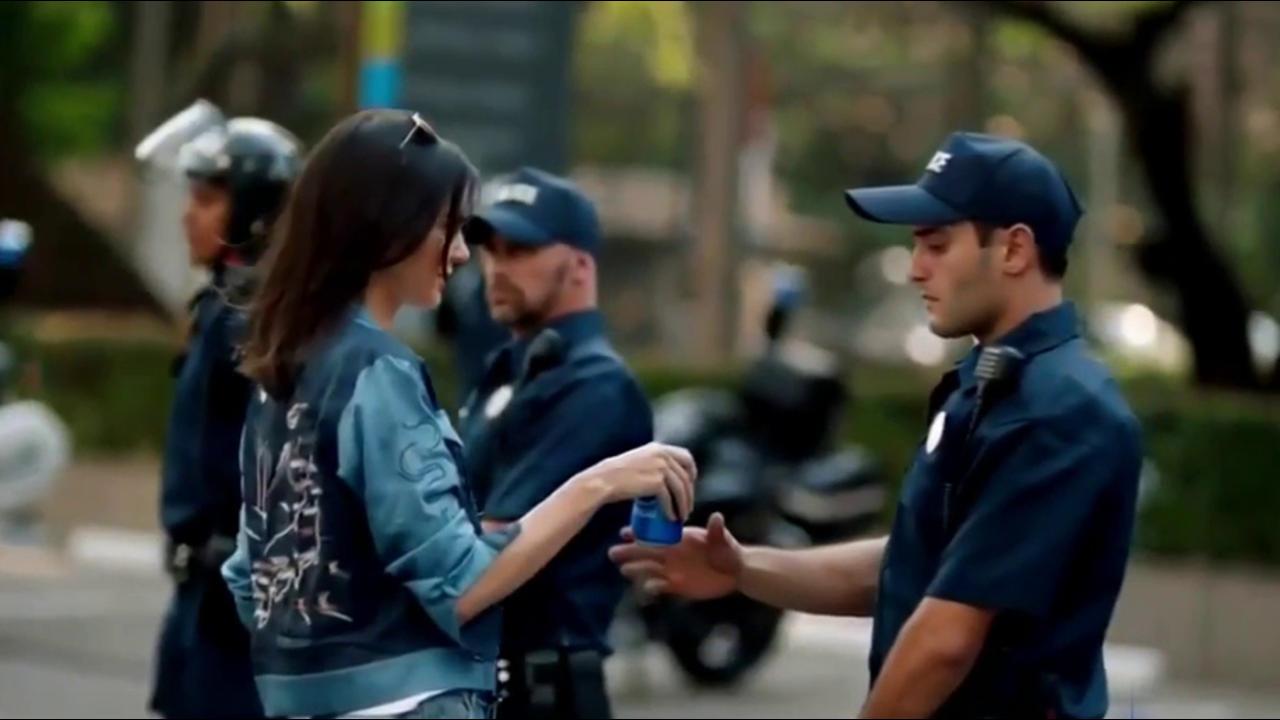
When Rojas was discussing how corporations can manipulate information in order to push a certain agenda to make some sort of profit from it, it (eerily) reminded me of the notorious Pepsi advertisement with Kendall Jenner. To shortly summarize, the Pepsi ad showed a bunch of diverse millennial's attending some protest, which was never specified. It looks as if everyone is having fun protesting, until they reach the police, who look ready to attack to these protestors, which eerily represents many “Black Lives Matter” protesters encounters with the police. It was not until Kendall Jenner appears out the crowd, handing a cop a can of Pepsi, and everyone starts celebrating again, this time, with the police. Of course, this came with mass criticism, and Pepsi pulled the ad. In response, they said that “Pepsi was trying to project a global message of unity, peace and understanding. Clearly we missed the mark, and we apologize...We did not intend to make light of any serious issue. We are removing the content and halting any further rollout. We also apologize for putting Kendall Jenner in this position.” I believe this is what Rojas meant by how corporations can
take an action and than manipulate it to fit their profit-driven agendas. All Pepsi cared about at the end of the day is how much money they can get from this advertisement. To refer back to the “smoke and mirror” image that Rojas presented, one can clearly see how corporations can funnel money into certain things in order to, 1) push agenda that they truly do not believe in, and 2) make money off of people’s struggling and activism. I think what Rojas is trying to get across is to be critical of non-profits who are funded by corporate America. Although Pepsi is not a non-profit, it clearly shows how they used an opportunity to make money off of the massive protests happening all over the United States which, most of the time, are led by community organizers and activists who are dealing with very serious problems and issues within the community and who also have to deal with these systems of power and violence that abuse so many people, with the police being one of them!
Something I want to discuss in class is how do we make movements and organizations stray away from these huge corporations that clearly only care about making money and not the issues these people are fighting for? Obviously, people need to make money to survive in the world, so taking corporate money is super appealing, especially for full-time community organizers and activists, but we all know corporations only care about how much money they are making, not the struggles many people face.


Image result for pepsi ad kendall jenner

 Image result for anti capitalist political cartoonThis is the greedy dollar taking over the world.